
Temperature Sensor Drift: Causes, Warning Signs, and Prevention
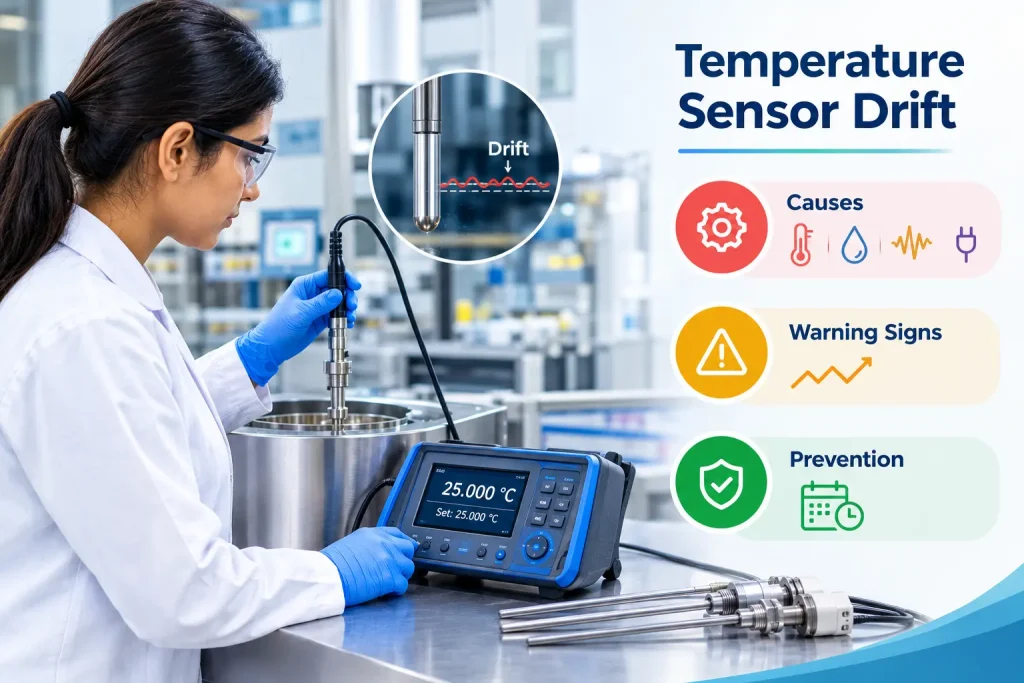
Temperature sensors are essential for accurate measurements in manufacturing facilities, laboratories, pharmaceutical operations, and other temperature-sensitive environments. Over time, sensors may develop measurement deviations that affect process control and product quality.
Understanding the causes, warning signs, and prevention methods helps organizations maintain measurement reliability, identify potential problems early, and make informed decisions about calibration and maintenance.
What Is Temperature Sensor Drift?
Temperature sensor drift occurs when a sensor’s measurement response changes over time, causing its readings to deviate from expected or reference values. It can affect resistance temperature detectors (RTDs), thermocouples, thermistors, and other temperature-measuring instruments.
Even small deviations can influence laboratory results, manufacturing processes, and product quality. Regular performance checks and appropriate calibration help determine whether an instrument continues to meet its accuracy requirements.
What Causes Temperature Sensor Drift?
Several factors can contribute to changes in temperature sensor accuracy:
- Repeated temperature cycling: Frequent heating and cooling can affect sensor materials and gradually change their measurement response.
- Environmental exposure: Humidity, vibration, corrosion, and contamination can damage sensitive components or affect performance.
- Material ageing: Prolonged use, particularly at elevated temperatures, can change the characteristics of sensing elements.
- Electrical issues: Loose connections, damaged wiring, and insulation deterioration can introduce measurement errors.
- Improper installation: Incorrect sensor placement, poor thermal contact, and unsuitable operating conditions can produce unreliable readings.
Identifying the underlying cause helps organizations select appropriate corrective measures and prevent recurring measurement problems.
Warning Signs of Temperature Sensor Drift
Sensor drift can develop gradually without obvious symptoms. Common warning signs include inconsistent readings, unexpected temperature fluctuations, differences between sensor readings and reference instruments, and repeated deviations from established process limits.
Unusual temperature trends or unexplained changes in process performance may also indicate a problem. However, similar symptoms can result from wiring faults, incorrect installation, or actual process variations. Investigating these possibilities before taking corrective action helps prevent unnecessary adjustments or instrument replacement.
How to Detect Temperature Sensor Drift
Organizations can identify potential drift through routine verification checks, performance monitoring, and calibration records. Comparing sensor readings with a suitable reference thermometer under controlled conditions can reveal measurement differences. Reviewing successive calibration certificates can also show whether deviations have increased over time.
For example, if a sensor consistently shows a larger deviation from reference values during successive calibrations, it may indicate a developing stability problem. Evaluate the findings against the instrument’s specified accuracy requirements and intended use.
Calibration establishes how an instrument’s readings compare with appropriate reference standards under specified conditions. It does not automatically correct measurement errors. Depending on the results, adjustment, repair, or replacement may be necessary. Documenting findings helps organisations track performance and choose appropriate corrective actions.
How to Prevent Temperature Sensor Drift
Although sensor drift cannot always be eliminated, several practices can help minimize its impact:
- Establish calibration intervals based on risk and previous performance.
- Operate sensors within their specified temperature ranges.
- Protect instruments from moisture, vibration, and corrosive environments.
- Inspect sensor wiring, connections, and installation regularly.
- Maintain calibration certificates and historical measurement records.
- Investigate unusual readings and recurring deviations promptly.
Combining preventive maintenance with regular performance monitoring helps identify potential problems before they significantly affect operations.
When Should a Temperature Sensor Be Recalibrated?
Recalibration may be necessary when a sensor produces questionable readings, exceeds acceptable error limits, undergoes repair, or experiences abnormal environmental exposure. The appropriate interval depends on sensor stability, frequency of use, operating conditions, measurement risks, and previous calibration results.
Organizations should review historical performance and applicable quality requirements when establishing calibration schedules. A risk-based approach is more appropriate than applying the same interval to every instrument.
Conclusion
Temperature sensor drift can compromise measurement reliability, process control, and product quality if it remains undetected. Understanding its causes, recognizing warning signs, and reviewing calibration results help organizations maintain dependable temperature measurements. Regular monitoring and appropriate maintenance also support timely corrective action.
Need reliable temperature measurements? Explore our temperature calibration services to understand how calibration can help assess instrument performance and support your measurement requirements.
FAQS
What are the common causes of a temperature sensor failure?
Temperature sensor failure can result from high temperatures, ageing, moisture, corrosion, physical damage, or electrical faults. Improper installation and operation beyond specified limits can also affect performance. Regular inspections and maintenance help prevent unexpected failures.
Which temperature sensor types are known for drifting issues?
RTDs, thermocouples, and thermistors can all experience measurement drift. Common causes include ageing, repeated temperature cycling, oxidation, contamination, and environmental exposure. Regular verification and calibration help maintain measurement accuracy.
When should a temperature sensor be recalibrated for industrial use?
Recalibrate a temperature sensor at scheduled intervals or when readings become inconsistent or exceed acceptable limits. Recalibration may also be necessary after repairs, damage, or extreme temperature exposure. Calibration frequency depends on usage, operating conditions, and previous results.
