
7 Essential Features to Check Before Buying an Industrial Pressure Gauge
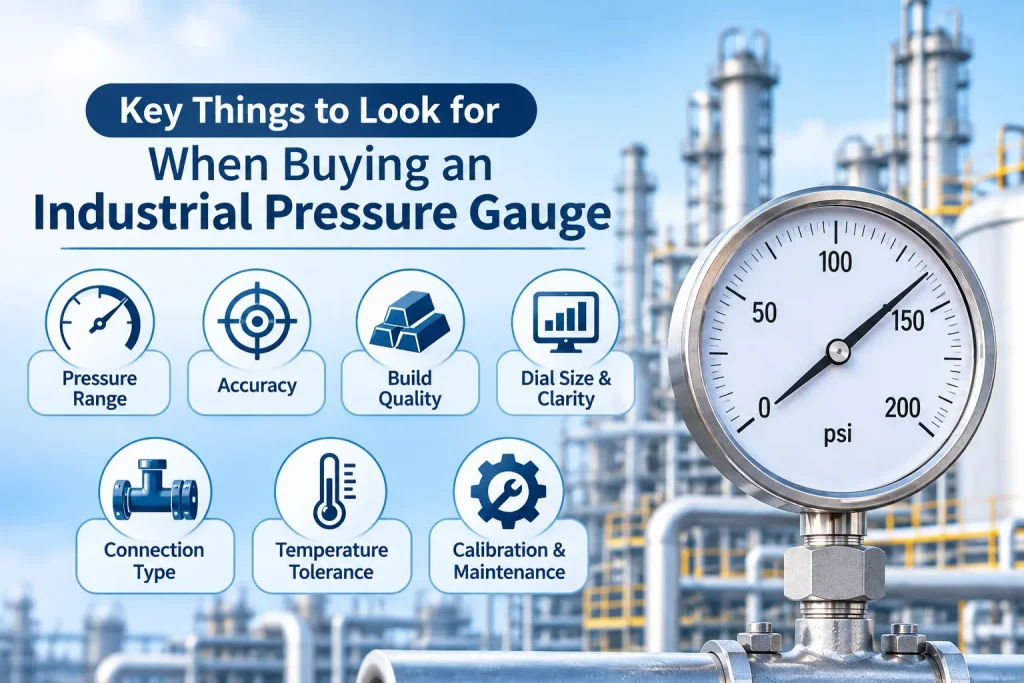
Industrial pressure gauges are essential for monitoring pressure in manufacturing plants, processing facilities, and industrial equipment. Selecting the right gauge ensures reliable readings and efficient operations. Before purchasing, consider factors such as measurement range, accuracy, construction material, and operating conditions.
Key Factors to Consider Before Buying
1. Pressure Measurement Range
The measurement range determines the minimum and maximum pressure a gauge can display. Choose a range that accommodates the system’s normal operating pressure and expected fluctuations. An appropriately selected range helps provide readable measurements and prevents the instrument from regularly operating beyond its specified limits. Always consider the actual working pressure before making a purchase.
2. Accuracy Class and Measurement Performance
Accuracy indicates how closely a pressure gauge’s reading corresponds to the actual pressure. Different industrial processes have different accuracy requirements. Before purchasing, check the manufacturer’s specified accuracy class and compare it with your application’s needs. This is particularly important in quality control, process monitoring, and applications where consistent pressure readings are necessary.
3. Material and Construction Quality
The construction material affects an instrument’s durability and suitability for different operating environments. Stainless steel and brass are commonly used in pressure gauge construction, depending on the design and application. Consider the process medium, corrosion exposure, and surrounding conditions when selecting a model. Appropriate material selection helps support long-term performance and reliable operation.
4. Dial Size and Display Readability
A clearly visible dial makes it easier for operators to monitor pressure readings. Industrial pressure gauges are available in different dial sizes to accommodate various installation requirements. Consider the viewing distance, available installation space, dial markings, and pointer visibility before selecting a suitable model. A readable display supports convenient pressure monitoring during routine operations.
5. Connection Type and Installation Compatibility
Pressure gauges are available with different connection sizes, thread types, and mounting configurations. Selecting the right connection is essential to ensure compatibility with existing pipelines, machinery, and pressure systems. Check the connection specifications, mounting arrangement, and installation requirements before purchasing. Proper compatibility helps avoid fitting-related problems and simplifies installation.
6. Operating Temperature and Environmental Conditions
Temperature variations, mechanical vibrations, moisture, and dust can affect a pressure gauge’s performance and service life. Review the manufacturer’s operating temperature limits and environmental specifications before making a selection. For demanding industrial applications, choose an instrument designed to withstand the conditions in which it will be installed and operated.
7. Calibration and Maintenance Requirements
Calibration helps identify measurement deviations and maintain confidence in pressure readings. Before purchasing, review the instrument’s calibration requirements, maintenance recommendations, and availability of calibration support. Regular calibration at appropriate intervals helps maintain measurement reliability and supports quality management and measurement control requirements. Learn more about how pressure gauge calibration works.
Common Industrial Applications of Pressure Gauges
Industrial pressure gauges are used across various industries to monitor operating pressure in equipment and processes. Common applications include:
- Hydraulic and Pneumatic Systems: Monitoring fluid and air pressure in industrial machinery and equipment.
- Boilers and Steam Systems: Checking operating pressure in boilers and steam equipment.
- Pumps and Compressors: Monitoring pressure during fluid and gas operations.
- Chemical and Pharmaceutical Industries: Measuring pressure in processing equipment and pipelines.
- Water Treatment Plants: Monitoring pressure in filtration and water distribution systems.
- Manufacturing Facilities: Checking pressure levels in production machinery and industrial processes.
The appropriate instrument depends on the operating pressure, process medium, installation conditions, and measurement requirements of each application.
Find the Right Industrial Pressure Gauge for Your Application
Selecting an appropriate pressure gauge involves evaluating its measurement range, accuracy, construction, installation requirements, and operating environment. Reviewing these specifications before purchasing helps businesses identify equipment that matches their industrial measurement needs.
NCQC Laboratory LLP provides industrial and laboratory instrument sales for businesses seeking suitable measurement equipment. Explore our Industrial & Laboratory Instrument Sales to learn more about our instrument sales services.
FAQS
Where can I buy an industrial pressure gauge?
You can buy industrial pressure gauges from specialized instrument suppliers offering measurement equipment for industrial and laboratory applications. NCQC Laboratory LLP provides industrial and laboratory instrument sales, helping businesses find suitable measuring instruments based on their application requirements.
Can I buy pressure gauges for laboratory and industrial applications?
Yes. Pressure gauges are widely used in industrial processes, laboratories, manufacturing facilities, and testing applications. NCQC Laboratory LLP offers industrial and laboratory instrument sales to support businesses looking for suitable measurement equipment for their operational needs.
What should I check before purchasing a pressure gauge from an instrument supplier?
Before purchasing a pressure gauge, consider its measurement range, accuracy class, construction material, connection type, operating temperature, and calibration requirements. Also, review the instrument specifications and consult your supplier to select a gauge suitable for your application.
