
Factors to Consider Before Purchasing Industrial Measuring Instruments
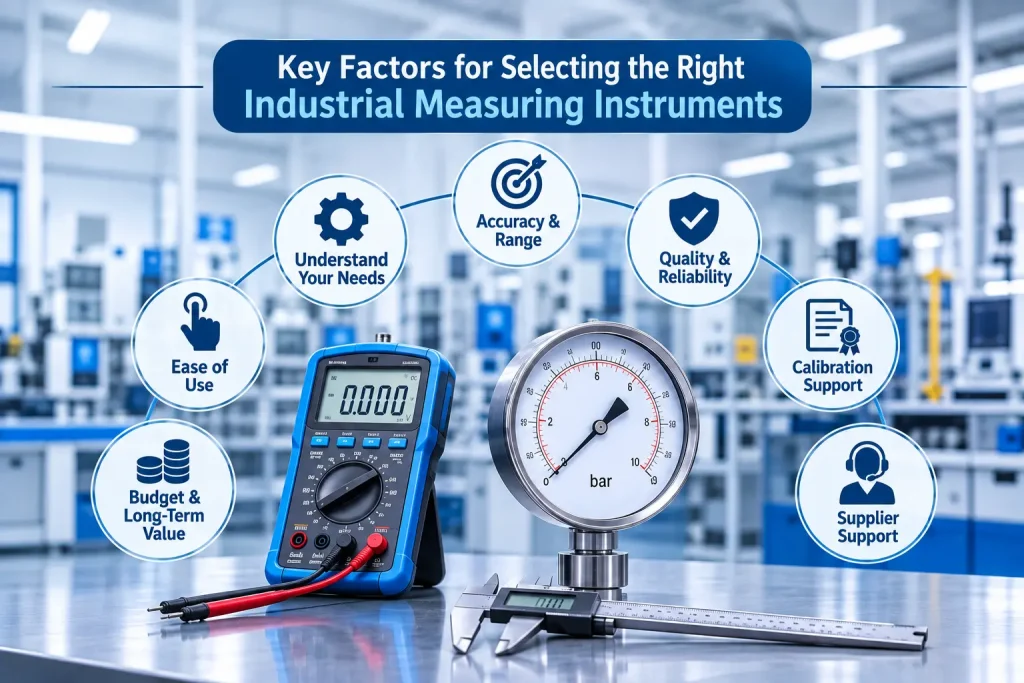
Industrial measuring instruments are essential for manufacturing, testing, inspection, and quality control. They help businesses monitor processes and maintain reliable measurement results. Before purchasing, it is important to consider factors such as technical specifications, measurement range, calibration support, and equipment quality to ensure the right choice for your operational needs.
1. Understand Your Measurement Requirements
The first step is to identify what needs to be measured and where the instrument will be used. Industrial applications may require instruments for measuring temperature, pressure, electrical parameters, dimensions, weight, humidity, or other physical quantities.
Consider whether the instrument is intended for routine monitoring, laboratory testing, product inspection, or process control. Understanding these requirements helps you select equipment that matches your actual application.
2. Check Accuracy, Range and Resolution
Accuracy, measurement range, and resolution are important specifications to evaluate before purchasing an instrument.
Understand the differences between these three factors:
- Accuracy: Indicates how closely a measured value agrees with a reference or accepted value.
- Measurement Range: Defines the minimum and maximum values an instrument is designed to measure.
- Resolution: Represents the smallest measurement change an instrument can display or detect.
Compare these specifications with your application requirements and acceptable measurement tolerances. Choosing suitable specifications helps ensure that the equipment can perform the intended measurement tasks.
3. Evaluate Instrument Quality and Reliability
Industrial environments can expose equipment to dust, vibration, moisture, temperature variations, and frequent handling. Therefore, consider the instrument’s construction, material quality, and durability before making a purchase.
Well-built equipment is generally more suitable for demanding working conditions. Choosing reliable instruments can also reduce unexpected equipment problems and support consistent performance over time.
4. Consider Calibration Requirements and Certification
Calibration helps determine whether an instrument’s measurement performance meets its specified requirements. Before purchasing, check whether calibration is required and whether suitable calibration support is available.
A calibration certificate provides documented information about calibration results, including measurement errors and measurement traceability where applicable. Appropriate calibration arrangements help maintain confidence in inspection and testing results.
5. Check Ease of Operation and Maintenance
Instruments should be easy to operate, read, and maintain. Features such as clear displays, accessible controls, simple settings, and user-friendly interfaces can improve daily operations.
Also, consider the availability of replacement parts, servicing, and technical assistance. Equipment with manageable maintenance requirements can support smoother laboratory and industrial activities.
6. Evaluate Supplier Reliability and After-Sales Support
Selecting the right supplier is as important as choosing the instrument itself. Look for suppliers that understand industrial measurement requirements and can provide technical guidance.
Check product specifications, warranty terms, installation assistance, and after-sales support. A knowledgeable supplier can help you identify appropriate equipment based on your measurement requirements and intended applications.
7. Compare Budget and Long-Term Value
Purchase price should not be the only deciding factor. Consider additional expenses such as installation, maintenance, calibration, accessories, and servicing.
Low-cost equipment may not always provide the performance required for demanding applications. Evaluating the overall cost of ownership helps businesses select instruments that offer dependable performance and long-term value.
Common Mistakes to Avoid When Buying Measuring Instruments
Avoid these common purchasing mistakes:
- Ignoring accuracy and measurement requirements.
- Selecting an unsuitable measurement range.
- Overlooking calibration requirements.
- Neglecting equipment quality and operating conditions.
- Focusing only on the initial purchase price.
- Ignoring maintenance and replacement part availability.
- Choosing suppliers without adequate technical support.
Reviewing these points before purchasing can help prevent unsuitable equipment selection and unnecessary expenses.
Conclusion
Purchasing the right industrial measuring instruments requires careful evaluation of measurement requirements, technical specifications, equipment reliability, calibration needs, and supplier support. By considering these factors, businesses can select suitable equipment for their testing, inspection, and quality control activities.
Explore our Industrial and Laboratory Instrument Sales services to find measuring and testing instruments for your industrial and laboratory requirements.
FAQS
What factors should be considered in selecting measurement equipment?
Consider measurement accuracy, range, resolution, application requirements, build quality, calibration needs, and ease of operation. Also, evaluate maintenance costs, warranty coverage, and supplier support to ensure the equipment meets your operational requirements.
What is the difference between accuracy and resolution?
Accuracy indicates how closely a measurement agrees with a reference value, while resolution represents the smallest change an instrument can display or detect. Both specifications influence equipment suitability for measurement applications.
Where can I purchase industrial and laboratory measuring instruments?
You can purchase industrial and laboratory measuring instruments from specialised suppliers such as NCQC Laboratory LLP. Explore their instrument sales services to find suitable measuring and testing equipment for different industrial and laboratory applications.
