


Why Medical Device Calibration Matters for Patient Safety and Accurate Results
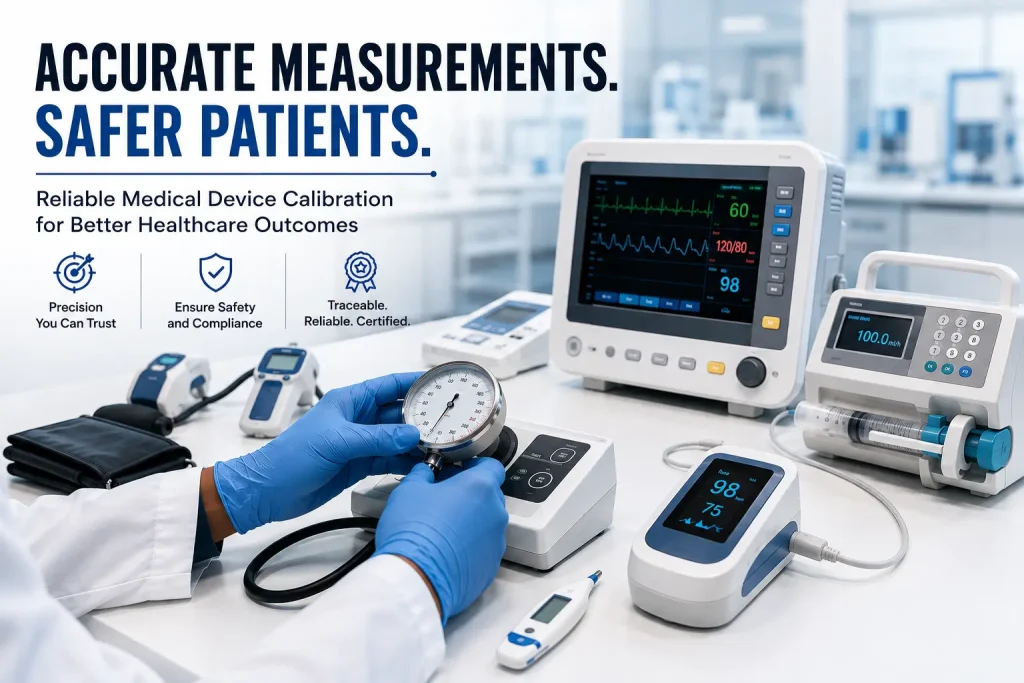
Accuracy is essential wherever medical equipment is used to measure important patient parameters. From blood pressure and temperature to oxygen saturatiaon and infusion flow rate, reliable measurements support dependable healthcare processes. This is why medical device calibration is an important part of maintaining the performance and reliability of healthcare and diagnostic equipment.
At NCQC Laboratory LLP, medical devices calibration services are designed to help hospitals, laboratories, and healthcare facilities maintain accurate measurements. The laboratory operates in accordance with ISO/IEC 17025 standards, with traceability to national and international standards.
What Is Medical Device Calibration?
Medical device calibration is the process of comparing healthcare instruments with certified reference standards to verify their measurement accuracy and performance. In some cases, instruments are adjusted and then re-verified to ensure they deliver precise and reliable readings.
This process is essential in identifying measurement deviations, reducing uncertainty, and ensuring the consistent performance of healthcare instruments. Regular calibration is a critical requirement for organizations that depend on accurate diagnostic and monitoring results in clinical environments.
Why Is Medical Equipment Calibration Important?
Healthcare facilities depend heavily on medical device equipment for accurate diagnosis, monitoring, and treatment decisions. Even minor inaccuracies in readings can impact patient care and overall healthcare quality.
- Regular calibration of medical instruments helps organizations:
- Maintain high levels of measurement accuracy and reliability
- Strengthen quality assurance and inspection processes
- Ensure traceability to national and international standards
- Support compliance with ISO 9001, ISO/IEC 17025, GMP, and regulatory requirements
- Minimize measurement errors and reduce rejection rates
For organizations evaluating medical device testing labs or a medical device testing laboratory, calibration capability, traceability, and accreditation are key factors in selecting a reliable service provider.
Which Medical Devices Require Regular Calibration?
Medical environments use a wide range of instruments that require periodic calibration to ensure safe and accurate performance. NCQC Laboratory LLP provides calibration support for several critical healthcare devices, including:
- Blood pressure monitoring systems
- Temperature measuring instruments
- ECG and heart rate monitoring devices
- Oxygen saturation (SpO₂) monitors
- Infusion and syringe pump systems
- Patient monitoring equipment
For instance, blood pressure calibration is performed using a digital manometer in the range of 0-300 mmHg through a comparison method. Similarly, calibration of an infusion device ensures accurate flow rate delivery, which is essential for patient safety and treatment effectiveness.
Key Benefits of Medical Device Calibration
Investing in regular medical device calibration services offers several important advantages for healthcare organizations:
- Improved Patient Safety: Accurate readings ensure correct diagnosis and treatment, reducing risks associated with incorrect measurements.
- Enhanced Equipment Reliability: Well-calibrated instruments perform consistently, reducing unexpected errors during critical operations.
- Regulatory Compliance: Calibration supports compliance with ISO, NABL, and other healthcare quality standards.
- Reduced Operational Errors: Minimizes measurement deviations that can lead to incorrect clinical decisions or rework.
- Better Quality Assurance: Strengthens internal quality control systems in hospitals and laboratories.
- Traceable Measurement Results: Ensures all results are linked to national or international measurement standards.
How Does the Medical Device Calibration Process Work?
At a professional medical device testing laboratory, calibration follows a structured, standardised process to ensure accuracy and reliability.
- Inspection and Preparation: The instrument is visually inspected, cleaned, and checked for any physical damage before calibration begins.
- Comparison With Reference Standards: Measurements are compared using certified medical calibration equipment under controlled environmental conditions.
- Error and Uncertainty Evaluation: Any deviation from standard values is recorded, and measurement uncertainty is calculated as part of the process.
- Adjustment and Verification: If required, the device is adjusted and re-tested to confirm accurate performance.
- Calibration Certificate Issuance: A detailed calibration report and certificate are provided, ensuring full traceability to recognized standards.
Conclusion: Trust NCQC Laboratory LLP for Precise Calibration Services
Accurate medical measurements are essential for dependable healthcare and diagnostic equipment. Regular medical device calibration services help maintain measurement accuracy, reliability, traceability, and quality.
NCQC Laboratory LLP is an ISO/IEC 17025 NABL-accredited calibration laboratory with experienced technical professionals and advanced calibration equipment. With its systematic approach to medical device calibration, NCQC supports hospitals, laboratories, and other healthcare facilities that require reliable calibration services.
Looking for reliable medical equipment calibration? Contact NCQC Laboratory LLP to discuss your medical-device calibration requirements.
FAQS
Is calibration necessary for all types of medical devices?
Not all medical devices have the same calibration requirements. Devices used for measurement and monitoring should be calibrated as per their specific requirements and applicable standards.
How does medical equipment calibration enhance patient safety in hospitals?
Medical equipment calibration helps maintain accurate and reliable measurements, supporting dependable monitoring, diagnosis, and treatment processes in healthcare environments.
What happens if medical equipment is not calibrated?
Without regular calibration, measurement errors may go unnoticed, affecting the reliability of results. Calibration helps verify accuracy, maintain traceability, and support consistent equipment performance.
