
Why Gas Detector Calibration Is Critical in Mining Operations
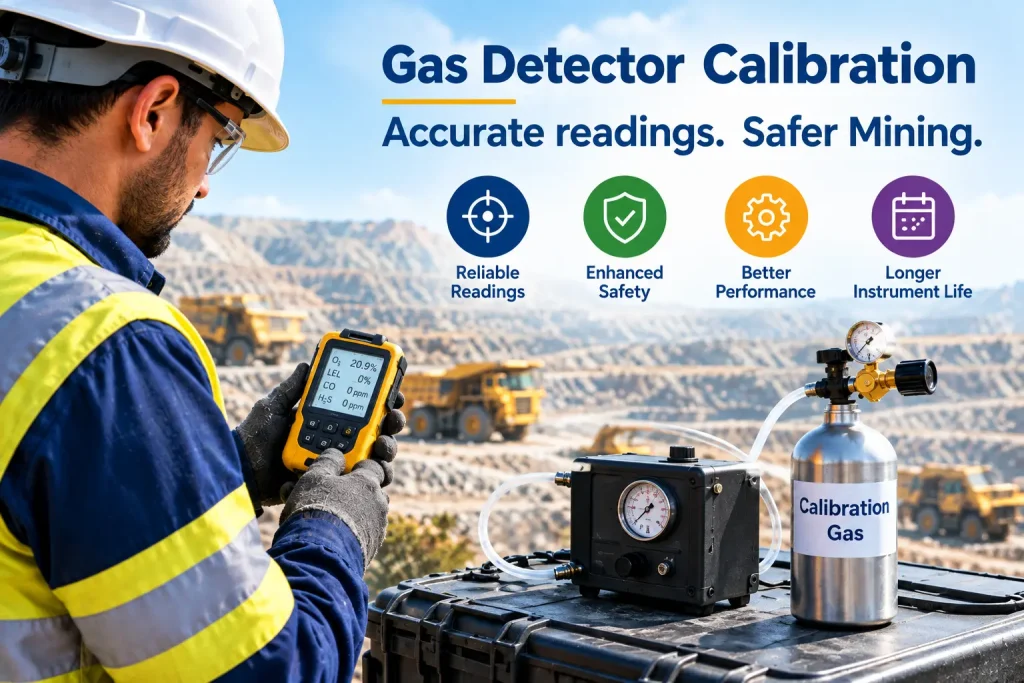
Mining operations often take place in challenging environments where reliable measurement of atmospheric conditions is essential. Gas detectors are used to monitor the presence and concentration of potentially hazardous gases. However, the reliability of their readings can change over time due to sensor drift, environmental exposure, and operating conditions. Proper gas detector calibration helps ensure that instruments provide dependable measurement results when they are needed.
What Is Gas Detector Calibration?
Gas detector calibration is the process of checking and adjusting an instrument’s response against a known reference or standard. The process helps determine whether the detector is responding accurately to a specified gas concentration.
Calibration is different from a functional or bump test, which generally checks whether the instrument responds to a gas stimulus. Calibration focuses on verifying and, where necessary, adjusting the instrument’s measurement response against a known reference.
Why Calibration Matters in Mining Operations
In Mining Operations, gas detectors may be exposed to dust, humidity, temperature changes, vibration, and continuous operation. These factors can influence sensor performance and contribute to measurement drift over time.
If a gas detector’s response changes, its readings may not accurately reflect the conditions being measured. Regular calibration helps identify changes in instrument performance and provides greater confidence in measurement results.
A well-managed calibration program also creates documented evidence of instrument performance and supports the traceability of measurement activities. This can be particularly valuable for organizations that manage large numbers of instruments across underground workings, surface facilities, processing areas, and other mining locations.
Key Factors Affecting Gas Detector Accuracy in Mining
Several factors can influence the accuracy and reliability of gas detector measurements.
Sensor Drift
Sensor characteristics can change gradually with time and usage. Calibration helps identify whether the detector’s response remains within its specified performance requirements.
Environmental Conditions
Mining environments may involve variations in temperature, humidity, dust, and other conditions. Exposure to such conditions can affect instrument performance depending on the detector design and sensor technology.
Sensor Contamination or Exposure
Contact with contaminants or prolonged exposure to certain substances may influence sensor response. Appropriate inspection, maintenance, and calibration can help identify potential measurement problems.
Instrument Age and Usage
Frequent operation and aging components may affect the performance of a detector. Calibration records can help organizations monitor instrument behavior over successive calibration cycles and identify changes that may require further attention.
Calibration Practices
The reliability of calibration results depends on using appropriate reference materials, suitable procedures, and appropriate calibration conditions. A calibration laboratory should follow applicable requirements and the manufacturer’s recommendations for the specific instrument.
How Calibration Supports Reliable Measurement in Mining
Calibration provides a systematic method for evaluating a detector’s response against a known reference. For mining organizations, calibration records can help track the performance of instruments used across underground workings, surface facilities, workshops, processing areas, and other locations.
Historical results can also help identify recurring deviations, changes in sensor performance, or instruments that may require closer monitoring. This information can support decisions concerning calibration intervals, maintenance, sensor replacement, and instrument management.
When Should Gas Detectors Be Calibrated in Mining?
The appropriate calibration interval depends on factors such as the manufacturer’s recommendations, detector type, frequency of use, environmental conditions, previous calibration results, and applicable requirements.
Additional calibration or performance verification may be appropriate after sensor replacement, maintenance, significant exposure, suspected damage, or when measurement results appear questionable. Mining organizations should establish their calibration practices based on the specific instrument and operating conditions rather than applying one interval to every detector.
Conclusion
Gas detector accuracy in mining can be influenced by sensor drift, temperature and humidity changes, dust, vibration, repeated use, exposure, and calibration practices. A structured gas detector calibration program helps mining organizations monitor instrument performance, maintain measurement traceability, and improve confidence in measurement results.
Need calibration support for gas detectors used in mining operations? Contact NCQC Laboratory to discuss your calibration requirements and support reliable measurement performance.
FAQS
Why is gas detector calibration critical for safety in mining operations?
Gas detector calibration verifies that the detector provides reliable readings when monitoring potentially hazardous gases. Regular calibration helps identify changes in sensor performance and supports dependable atmospheric monitoring in mining environments.
How do temperature and humidity affect gas detector calibration accuracy?
Temperature and humidity changes can affect sensor response and measurement performance. Calibration under appropriate conditions helps verify that the detector continues to perform within its specified requirements.
What factors can affect gas detector accuracy in mining?
Factors can include sensor drift, temperature and humidity changes, dust, contamination, repeated use, vibration, exposure to certain substances, instrument age, and improper calibration practices.
