


Electrical Calibration: What It Covers and Why It Matters
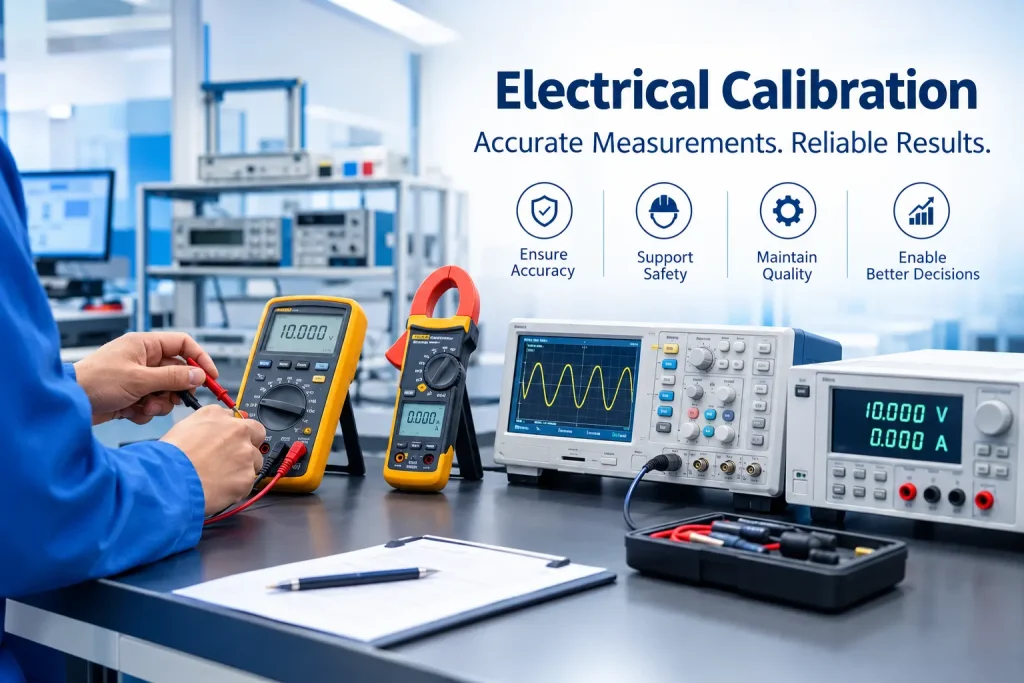
Accurate electrical measurements are essential for quality, safety, testing, and reliable decision-making. Electrical calibration ensures instruments such as digital multimeters, clamp meters, oscilloscopes, and other electrical testing equipment provide accurate, dependable readings.
Over time, electrical instruments can experience measurement drift due to regular use, ageing, or environmental conditions. Regular electrical equipment calibration helps identify measurement errors, maintain measurement accuracy, and support quality control across manufacturing, laboratories, testing facilities, and other industries.
What Is Electrical Calibration?
Electrical calibration compares the performance of an electrical measuring instrument against a known, traceable reference standard. The purpose is to determine whether the instrument is measuring within its specified accuracy limits.
Over time, electrical instruments can experience measurement drift because of regular use, environmental conditions, aging, or physical stress. Calibration helps identify these deviations and provides documented evidence of the instrument’s measurement performance.
Professional electrical calibration services can be used across manufacturing, laboratories, testing facilities, maintenance operations, research environments, and other industries where accurate electrical measurements are important.
What Does Electrical Calibration Cover?
Electrical calibration can cover a range of electrical measurement parameters, depending on the capabilities of the instrument and the scope of the calibration service.
Voltage Calibration
Voltage calibration verifies the accuracy of an instrument when measuring electrical voltage. Instruments such as digital multimeters and electrical testers may require voltage calibration to ensure their readings remain within acceptable limits.
Current Calibration
Current calibration evaluates the accuracy of current measurements. It is important for instruments used to measure electrical current during testing, maintenance, and troubleshooting activities.
Resistance Calibration
Resistance calibration checks whether an instrument accurately measures resistance. Reliable resistance measurements are commonly required when testing electrical components, circuits, and systems.
Frequency and Signal Calibration
Some electrical and electronic instruments measure frequency or electrical signals. Calibration can verify their performance against appropriate reference values, helping maintain dependable results during testing and measurement activities.
Other Electrical Parameters
Depending on the equipment and calibration scope, electrical calibration may also cover parameters such as capacitance, inductance, power, and related measurements.
When Should Electrical Equipment Be Calibrated?
There is no single calibration interval that applies to every electrical instrument. The appropriate frequency can depend on several factors, including:
- Manufacturer recommendations
- Frequency of equipment use
- Operating and environmental conditions
- Previous calibration results
- Instrument stability and history
- Required measurement accuracy
- Applicable industry or quality requirements
Organizations should establish calibration intervals based on their equipment, application, risk, and documented calibration history rather than relying on a one-size-fits-all schedule.
Who Needs Electrical Calibration Services?
Electrical calibration may be relevant to organizations that rely on electrical measurements for testing, inspection, production, maintenance, or quality control.
These may include:
- Electrical and electronics manufacturers
- Calibration and testing laboratories
- Manufacturing facilities
- Research and development organizations
- Testing and inspection organizations
- Maintenance departments
- Quality control teams
- Engineering and technical service organizations
For these organizations, maintaining measurement accuracy can help support dependable testing and consistent operational decisions.
Why Professional Electrical Calibration Matters
Electrical measuring instruments are used to make decisions about products, processes, equipment, and systems. If an instrument produces inaccurate measurements, the resulting decisions may also be affected.
Professional calibration provides a systematic way to verify instrument performance, identify measurement errors, maintain calibration records, and support confidence in electrical measurement results.
Rather than waiting until an instrument appears to be producing incorrect readings, organizations can use a planned calibration program to monitor measurement equipment and maintain appropriate control over its performance.
Conclusion
Electrical calibration plays an important role in maintaining confidence in electrical measurements. From voltage, current, and resistance to frequency and other electrical parameters, calibration helps verify the performance of measuring and testing equipment.
Regular calibration can help organizations identify measurement drift, support quality control, maintain accurate records, and meet applicable measurement and quality requirements.
If your organization relies on electrical measuring instruments, choosing a qualified electrical calibration service provider can help ensure that your equipment is properly checked, documented, and maintained for accurate performance. Contact us today to schedule your electrical calibration service or get a quote.
FAQS
What is measurement traceability in electrical calibration?
Measurement traceability means linking an electrical calibration result to recognized measurement standards through a documented chain of calibrations. It helps ensure that the instrument’s measurements are reliable and can be compared with established standards.
How often should electrical instruments be calibrated?
The calibration interval depends on factors such as manufacturer recommendations, equipment usage, environmental conditions, previous calibration results, required accuracy, and applicable quality or industry requirements.
Which instruments require electrical calibration in industrial settings?
Industrial instruments commonly requiring electrical calibration include digital multimeters, clamp meters, insulation resistance testers, oscilloscopes, power meters, frequency meters, and electrical testers. Calibration requirements depend on the instrument, its use, accuracy requirements, and manufacturer recommendations.
