


pH Meter Calibration: A Complete Guide to Accurate pH Measurement
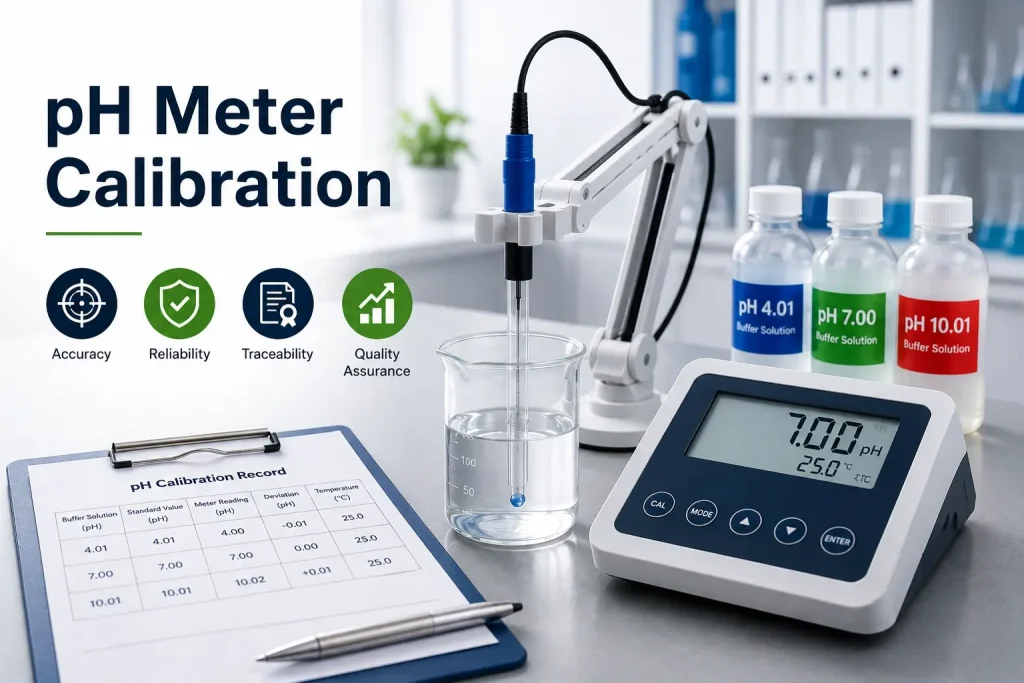
Accurate pH measurement is essential across laboratories and industries where the quality, safety, and performance of a product or process depend on reliable results. A pH meter is a commonly used pH measurement instrument, but its accuracy can change over time due to electrode ageing, contamination, temperature variations, improper storage, and regular use. This makes pH meter calibration an important part of maintaining measurement accuracy and confidence.
Professional calibration provides documented evidence of an instrument’s performance against suitable reference standards. It can also support quality management systems, audits, regulatory requirements, and traceability of measurement results.
What Is pH Meter Calibration?
pH meter calibration is the process of comparing the readings of a pH meter with known reference values and determining whether the instrument is performing within specified limits. Depending on the instrument and application, calibration is commonly performed using certified pH meter calibration solutions, also known as buffer solutions.
Calibration helps identify measurement deviation, supports reliable results, and provides traceability to appropriate measurement standards. Where required, a professional calibration laboratory can perform the calibration under controlled conditions and issue a calibration certificate.
How Does a pH Meter Work?
A typical pH meter uses a pH-sensitive electrode to detect the hydrogen-ion activity of a solution. The electrode produces an electrical potential that varies with the pH of the sample. The meter measures this electrical signal and converts it into a pH value shown on the display.
The electrode is sensitive to factors such as temperature, contamination, ageing, hydration, and storage conditions. As its characteristics change, the instrument may gradually develop measurement errors. Regular calibration helps compensate for normal electrode behaviour and identify performance changes.
Why Is pH Meter Calibration Important?
Reliable pH measurements are important for laboratory testing, research, manufacturing, water and wastewater analysis, food and beverage processing, pharmaceuticals, chemicals, and many other applications.
Regular calibration helps to:
- Improve the accuracy and reliability of pH measurements
- Detect instrument drift and electrode deterioration
- Reduce measurement errors
- Improve repeatability and consistency
- Support quality-control activities
- Provide confidence in laboratory results
- Demonstrate measurement traceability
- Maintain appropriate calibration records
- Support internal and external audits
For organizations operating under a quality management system, a calibration certificate provides documented evidence of the instrument’s calibration status and measured performance.
How Is a pH Meter Calibrated?
The exact procedure depends on the instrument, applicable specifications, and laboratory calibration method. A typical professional calibration process includes the following stages.
1. Instrument Identification and Inspection
The pH meter and electrode are identified, and their general condition is checked. The laboratory may inspect the electrode, connectors, cables, display, and other relevant components for visible damage or abnormal conditions.
2. Selection of Reference Standards
Suitable certified buffer solutions are selected according to the required calibration points and measurement range. Reference standards should have appropriate accuracy and traceability.
3. Measurement and Comparison
The instrument is operated under controlled conditions and readings are obtained using the selected reference solutions. Temperature and other relevant measurement conditions are considered.
4. Error and Uncertainty Evaluation
The observed readings are compared with the reference values. Measurement error and applicable uncertainty components are evaluated according to the laboratory’s calibration procedure.
5. Calibration Documentation
The results are recorded and a calibration certificate or report is issued. This documentation provides important information about the instrument, reference standards, results, uncertainty, and calibration status.
How often should a laboratory pH meter be calibrated?
There is no single calibration frequency suitable for every application. The appropriate interval depends on factors such as:
- Frequency of instrument use
- Type and condition of the electrode
- Required measurement accuracy
- Nature of the samples
- Environmental conditions
- Manufacturer recommendations
- Internal quality and regulatory requirements
- Previous calibration history
For demanding laboratory or production applications, organisations may also perform routine checks between formal calibration intervals. A risk-based calibration schedule helps ensure that instruments remain fit for their intended use.
pH Meter Calibration vs. Validation: What Is the Difference?
pH meter calibration and pH meter validation are related but different activities.
Calibration determines how closely an instrument’s measurements agree with established reference values. Validation, on the other hand, is a broader documented process used to demonstrate that an instrument, method, or system is suitable for its intended application.
Both activities can be important in a controlled laboratory environment, but they serve different purposes.
Conclusion
pH meter calibration is an important part of maintaining reliable and traceable pH measurements. Regular calibration helps identify measurement errors, monitor instrument performance, and provide confidence in results. For laboratories and industries where measurement accuracy is critical, professional calibration and proper documentation can also support quality and compliance requirements.
NCQC Laboratory LLP provides professional calibration services with an emphasis on accuracy, traceability, measurement uncertainty, and systematic reporting. The laboratory’s broader calibration services cover multiple measurement disciplines and are operated in accordance with ISO/IEC 17025 requirements.
Need reliable calibration for your pH measurement instrument or other laboratory equipment? Contact NCQC Laboratory LLP to discuss your calibration requirements and obtain professional calibration support.
FAQS
Why is pH meter calibration essential for accurate results?
pH meter calibration helps maintain reliable and consistent pH measurements. It identifies measurement deviations caused by factors such as electrode ageing, contamination, temperature changes, and regular use.
What is the difference between pH meter calibration and verification?
Calibration evaluates the pH meter’s performance against suitable reference standards, while verification is a routine check to confirm that the instrument continues to meet specified requirements between calibration intervals.
What are the common buffer solutions used for pH meter calibration?
Common pH meter calibration solutions include pH 4.01, 7.00, and 10.01 buffers. The appropriate solution depends on the instrument, measurement range, and intended application.
