


7 Warning Signs Your Torque Wrench Needs Recalibration
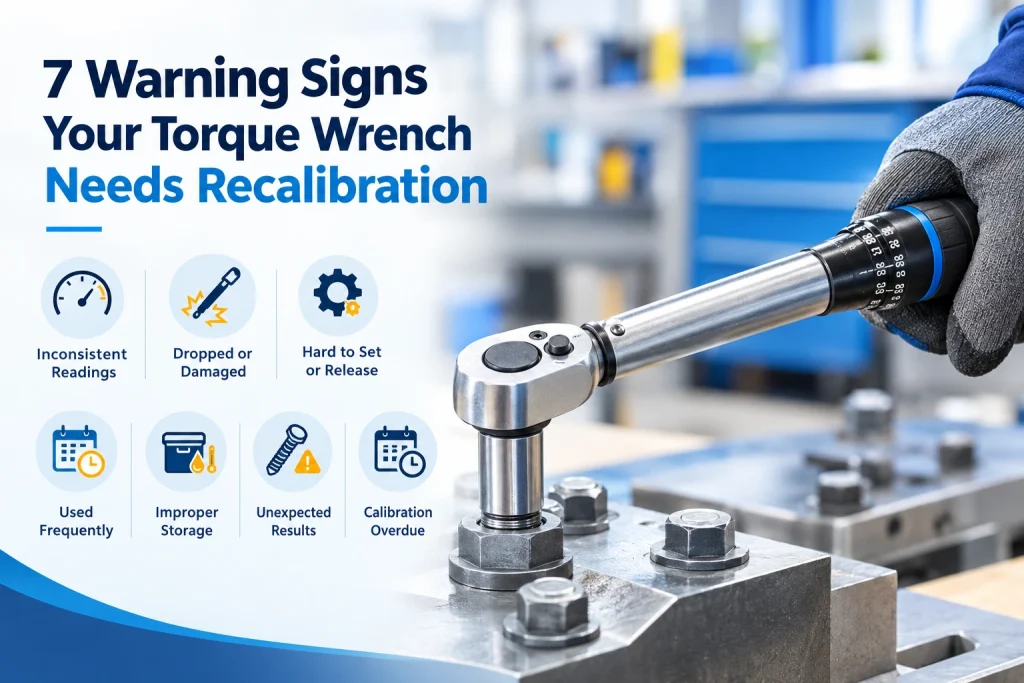
A torque wrench applies a specific amount of torque to fasteners during assembly, maintenance, and inspection. Accurate torque is important because both under-tightening and over-tightening can affect the performance, safety, and reliability of components.
Over time, a torque wrench can lose performance due to frequent use, accidental impact, mechanical wear, improper storage, or unsuitable operating conditions. Recognizing the warning signs can help determine when a torque wrench should be inspected, its accuracy verified, or recalibration arranged.
Here are seven signs to watch for.
1. Inconsistent Torque Readings
One of the first warning signs is inconsistent torque performance. If the same torque setting produces noticeably different results during repeated use, the wrench may no longer be providing reliable measurements.
Inconsistent results can affect assembly quality, particularly when several fasteners must be tightened to the same specified torque. If variations continue after checking the operating procedure and fastener conditions, calibration or verification should be considered.
2. The Wrench Has Been Dropped or Damaged
A torque wrench can be affected by accidental drops, impacts, or other physical damage. Even when there is no obvious external damage, an impact may affect internal components or the calibration of the tool. Continuing to use a torque wrench after a significant impact without checking its accuracy can introduce measurement uncertainty.
It is advisable to have the wrench inspected and calibrated after a major impact or suspected damage.
3. Difficulty Setting or Releasing the Torque
Changes in the way a torque wrench operates can also indicate a problem. Unusual resistance when adjusting the torque setting, difficulty with the locking mechanism, or problems returning the wrench to its required setting may indicate mechanical issues.
The wrench should operate according to its design and the manufacturer’s instructions. If its adjustment or release mechanism behaves differently from normal, professional inspection can help determine whether further servicing or calibration is required.
4. The Torque Wrench Has Been Used Frequently
Frequent use can gradually contribute to wear in a torque wrench and may affect its accuracy over time. A tool used every day may require more frequent attention than one used occasionally.
The appropriate calibration interval depends on factors such as usage, application, environmental conditions, and manufacturer recommendations. Keeping calibration records can help organizations identify when a torque wrench is due for its next calibration.
5. The Wrench Was Stored Incorrectly
Improper storage can affect the condition and performance of a torque wrench. Leaving a wrench under load or storing it in a manner that is inconsistent with the manufacturer’s instructions may contribute to mechanical problems over time.
Exposure to excessive heat, moisture, dirt, or other unsuitable conditions can also contribute to deterioration. Always follow the manufacturer’s storage recommendations and protect the instrument between uses.
6. The Wrench Produces Unexpected Fastener Results
Unexpected fastening results may also indicate that a torque wrench needs attention. For example, bolts may repeatedly appear too loose or excessively tight despite using the specified torque setting.
However, other factors, such as fastener condition, lubrication, thread condition, or tightening technique, can also influence the final result. If these factors have been checked and the problem continues, the torque wrench should be inspected and calibrated to verify its performance.
7. The Calibration Interval Has Been Reached
An overdue calibration is a straightforward reason to arrange recalibration. A torque wrench should be calibrated according to the organization’s established schedule, taking into account manufacturer recommendations, usage, application criticality, operating conditions, and previous calibration performance.
There is no single calibration interval that applies to every torque wrench. A risk-based approach can help organizations determine an appropriate interval for individual instruments based on their use and measurement requirements.
What to Do When Your Torque Wrench Shows These Signs
If you notice any of these warning signs, avoid relying on the wrench for critical torque applications until its condition and accuracy have been verified. Have it inspected and calibrated by a competent calibration laboratory or service provider. Maintaining calibration certificate and records can also help organizations monitor the instrument’s calibration history.
Conclusion
Regular inspection, proper handling, and timely calibration help maintain reliable torque measurements. If your torque wrench shows any warning signs, its accuracy should be verified before continued use.
For organizations requiring torque wrench calibration, NCQC Laboratory offers laboratory and calibration services as part of its force, hardness, and torque calibration capabilities.
FAQS
What are the signs my torque wrench is losing accuracy?
Common signs include inconsistent torque readings, difficulty adjusting the wrench, unusual operation, unexpected fastener results, or physical damage. If these occur, have the torque wrench inspected and its accuracy verified or recalibrated.
Can I safely use a torque wrench if its calibration date has passed?
For critical applications, it is best to have an overdue torque wrench calibrated or its accuracy verified before use. Calibration intervals should follow manufacturer recommendations and your organization’s measurement requirements.
What is the difference between torque wrench verification and calibration?
Verification checks whether the torque wrench meets specified performance requirements, while calibration involves determining its measurement performance against suitable measurement standards. The appropriate process depends on the organization’s requirements and applicable procedures.
