
Calibration in the Petrochemical Industry: Accuracy, Safety, and Reliability
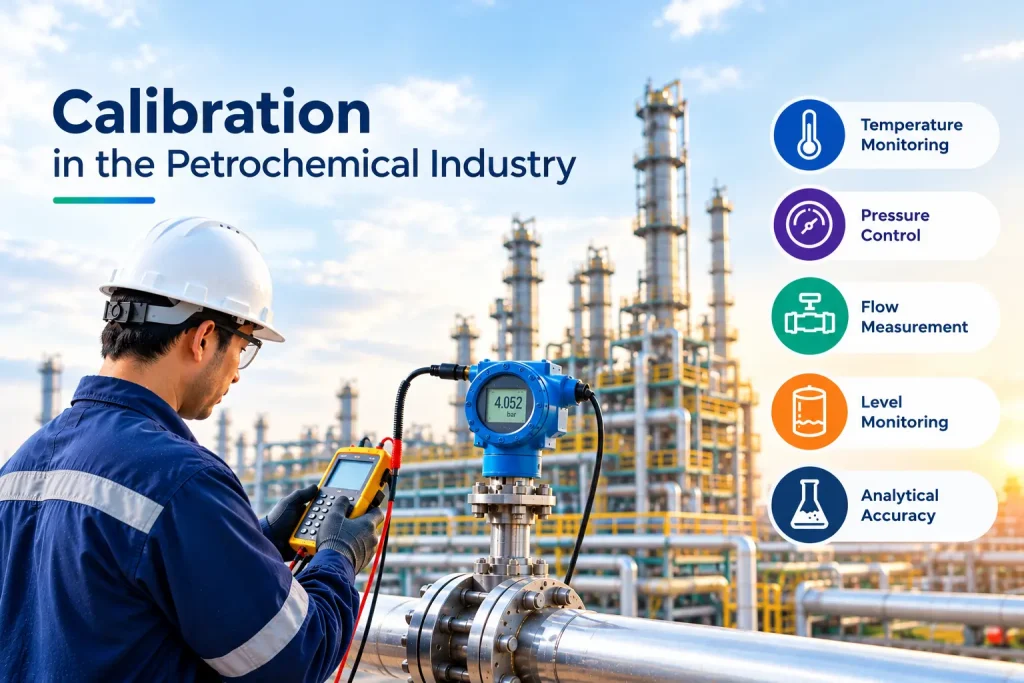
Modern petrochemical operations require accurate temperature, pressure, flow, and level measurements to monitor reactions, control material movement through pipelines, and maintain consistent production conditions. Even small measurement errors can affect process efficiency, raw material usage, and final product quality.
To maintain measurement accuracy, petrochemical calibration involves comparing instrument readings with reference standards to evaluate performance. The results help identify deviations and determine whether adjustment, repair, or further investigation is needed.
Why Accurate Measurements Matter in Petrochemical Plants
Petrochemical production involves several interconnected processes, where a small error in one measurement can affect other operations. For instance, an incorrect temperature reading in a reactor may cause operators to misunderstand the conditions required for a chemical reaction. Similarly, inaccurate flow readings can affect the quantity of raw materials entering a process and influence the quality of the finished product.
Regular instrument calibration helps determine whether measuring devices are operating within their specified tolerances. It also helps identify instrument drift, which can develop over time due to continuous use, harsh operating conditions, or ageing components.
Consistent measurements help operators track process changes and keep production conditions within established limits. This supports effective process control and helps maintain consistent product specifications.
Critical Instruments Used in Petrochemical Calibration
Petrochemical plants use instruments to monitor process conditions and product characteristics. The calibration method depends on the instrument type, measurement range, operating conditions, and intended application.
- Temperature sensors: RTDs, thermocouples, and temperature transmitters measure temperatures in reactors, heat exchangers, and furnaces. Calibration verifies whether their readings meet the required measurement tolerances.
- Pressure instruments: Pressure gauges and transmitters monitor pipelines, storage vessels, pumps, and processing equipment. Their calibration results help determine whether the instruments are performing within specified limits.
- Flow meters: These instruments measure feedstocks, chemicals, and finished products moving through a process. Accurate flow measurements support process control and material balance calculations.
- Level instruments: Level transmitters and indicators measure liquid levels in storage tanks and process vessels, supporting inventory monitoring and process control.
- Analytical instruments: Process analyzers measure chemical composition and other material properties. Depending on the instrument, calibration and performance checks help establish whether the results are suitable for their intended use.
Calibration Challenges in Demanding Process Environments
Instruments used in petrochemical plants often operate under challenging conditions. High temperatures, vibration, pressure fluctuations, corrosive materials, and contamination can affect sensor performance and cause readings to drift over time.
Production schedules can also make calibration more complicated. Removing an instrument for laboratory calibration may require careful planning and coordination with maintenance teams, particularly when equipment shutdowns are involved. Where technically appropriate, on-site calibration may reduce equipment removal and minimize disruption to operations. The best approach depends on the instrument, its application, and the conditions in which it operates.
Another challenge is determining whether an unusual reading indicates an instrument fault or an actual process change. Comparing instrument readings with process data and checking the instrument’s condition can help technicians investigate discrepancies and identify appropriate corrective actions.
How Calibration Supports Process Reliability and Safety
Operators use instrument readings to monitor plant conditions and recognize when values move outside established operating limits. When calibration identifies a measurement deviation, maintenance teams can investigate the issue and take corrective action before continuing to rely on potentially inaccurate readings.
This is particularly important for instruments associated with process alarms and safety instrumented functions. Such instruments must be calibrated, inspected, and tested according to their technical requirements and applicable safety procedures. Calibration alone cannot guarantee safe plant operation; it works alongside preventive maintenance, functional testing, hazard management, and established operating procedures.
Calibration records help maintenance teams track instrument performance over time and identify recurring deviations. This information can guide decisions about adjustment, replacement, inspection, or changes to calibration intervals.
Conclusion
Accurate measurements are essential for consistent product quality and reliable petrochemical plant operations. Regular calibration helps detect instrument deviations and supports effective process control and safe operations.
For more information about calibration requirements for your petrochemical applications, contact our team to discuss your specific needs.
FAQS
What is petrochemical calibration and why is it important?
Petrochemical calibration involves checking instrument readings against appropriate reference standards to evaluate measurement accuracy. It helps identify deviations, maintain reliable process measurements, and support product quality and safe plant operations.
Which instruments require calibration in petrochemical plants?
Common instruments include temperature sensors, pressure gauges, pressure transmitters, flow meters, level transmitters, and process analyzers. The calibration requirements depend on the instrument’s function, operating conditions, and measurement accuracy requirements.
How does calibration improve product quality in petrochemical manufacturing?
Calibration helps ensure that instruments provide measurements within specified tolerances. Reliable readings allow operators to monitor process conditions, control raw material proportions, and maintain consistent product specifications.
