
Speedometer Calibration: A Complete Guide for Accurate Speed Measurement
Accurate speed measurement supports road safety, vehicle performance and compliance with applicable automotive requirements. A speedometer helps drivers monitor speed and make informed decisions. However, tyre replacements, mechanical wear, sensor faults and vehicle modifications can affect the displayed value.
Calibration and verification establish whether the indicated speed agrees with a suitable reference measurement. The process reveals discrepancies and whether corrective action is needed where necessary.
Understanding Speedometer Calibration and How It Works
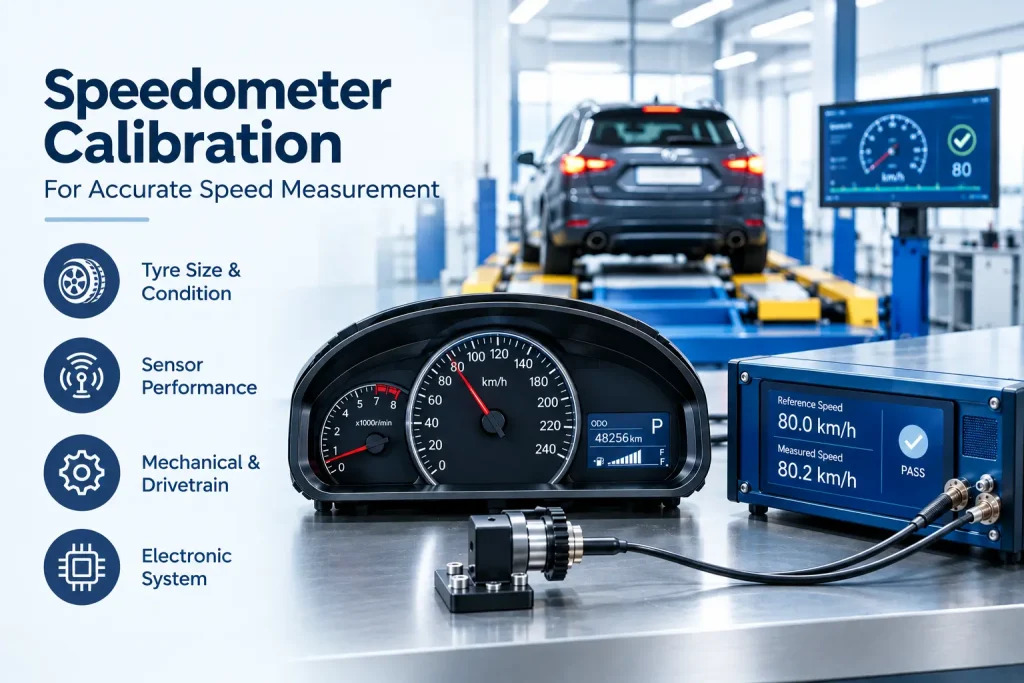
Speedometer calibration involves comparing the displayed speed with a suitable reference value. In many modern vehicles, electronic sensors monitor wheel or transmission rotation. They send signals to an electronic control unit, which calculates the speed shown on the dashboard.
Older vehicles may use a mechanical system, with a flexible cable connecting the transmission to the instrument. Although the mechanisms differ, both designs provide information about vehicle speed. The appropriate testing approach depends on the vehicle’s construction and measurement system.
Key Factors That Affect Speedometer Accuracy
Several conditions can affect the reliability of vehicle speed indications:
- Tyre size and circumference: Different dimensions change the distance travelled during each wheel rotation and can affect calculated speed.
- Speed sensor faults: Damaged or malfunctioning sensors may send inaccurate signals to the control system.
- Transmission modifications: Changes to gearing or drivetrain components can alter speed calculations.
- Electronic system problems: Wiring faults, incorrect settings or control module issues may cause inconsistent values.
- Mechanical wear: Ageing components can affect traditional instruments over time.
Identifying the cause matters because the solution may involve repair or configuration changes rather than calibration alone.
Speedometer Calibration Methods: How Is Accuracy Verified?
The choice of testing method depends on the vehicle’s design, required measurement conditions and available equipment.
1. Road Testing
The vehicle is driven under controlled conditions while its dashboard indication is compared with a suitable reference reading. This approach helps evaluate instrument performance during actual vehicle operation. Testing should follow appropriate procedures and safety requirements.
2. Dynamometer-Based Testing
A chassis dynamometer uses rollers to simulate vehicle movement while the vehicle remains stationary. Technicians can observe displayed speed at selected test points without requiring conventional road testing. The equipment setup must be suitable for the vehicle being examined.
3. GPS-Based Comparison
A GPS device estimates speed by measuring changes in geographical position over time. Comparing this value with the dashboard indication can help identify possible differences. However, signal quality, surrounding conditions and device performance can influence results. GPS comparison should not automatically replace calibrated reference equipment.
4. Electronic System Checks
For electronically controlled instruments, technicians can examine sensor signals, wiring connections, vehicle settings and software configurations. Adjustments depend on manufacturer specifications and the capabilities of the installed system.
Step-by-Step Speedometer Calibration Procedure
A consistent process helps assess measurement differences and determine whether corrective action is required.
- Initial inspection: Examine the instrument, tyres, wheel dimensions, sensors and related components for damage or incorrect specifications.
- Equipment selection: Choose a suitable reference instrument or test system. Check its range, condition and calibration status.
- Measurement: Record displayed speed and corresponding reference values at selected test points, following the applicable procedure.
- Error assessment: Compare the values and determine the difference at each point. Evaluate results against relevant acceptance criteria.
- Corrective action: If deviation exceeds permitted limits, investigate its cause. Perform suitable repairs or adjustments where manufacturer guidance allows.
- Final verification: Repeat measurements after corrective work and document results to confirm whether the system meets required criteria.
Equipment Required for Speedometer Testing and Calibration
Commonly used equipment includes dedicated speed testers, chassis dynamometers, GPS-based devices, automotive diagnostic scanners and calibrated reference instruments. Some devices measure vehicle movement, while others help examine electronic signals and system settings.
Equipment selection should consider the vehicle type, testing method, measurement range and required accuracy. Properly maintained instruments with valid calibration status support dependable testing results.
Conclusion
Reliable speed readings help drivers make informed decisions and support the safe operation of vehicles. Periodic checks can identify discrepancies resulting from tyre replacements, sensor issues, drivetrain modifications or component wear. Appropriate testing methods and dependable reference equipment are essential for evaluating instrument performance.
If you require calibration for speedometers, tachometers or RPM instruments, explore our calibration services to learn more about the available capabilities. You can also get in touch with our team to discuss your specific requirements.
FAQS
What is speedometer calibration and why is it important?
Speedometer calibration is the process of checking an instrument’s accuracy by comparing its displayed speed with a reliable reference measurement. It is important because accurate readings help drivers monitor vehicle speed, support road safety and identify measurement discrepancies that may require corrective action.
How can a speedometer be calibrated?
A speedometer is calibrated by comparing displayed readings with a reference measurement using suitable testing equipment. Identified discrepancies are corrected through appropriate adjustments or repairs following manufacturer specifications.
Can speedometer, tachometer and RPM instruments be calibrated?
Yes. Speedometers, tachometers and other RPM measuring instruments can be tested and calibrated using suitable equipment and procedures. The method depends on the instrument’s operating mechanism, measurement range and applicable technical requirements.
