


Why Does Defense Test Equipment Need Regular Calibration?
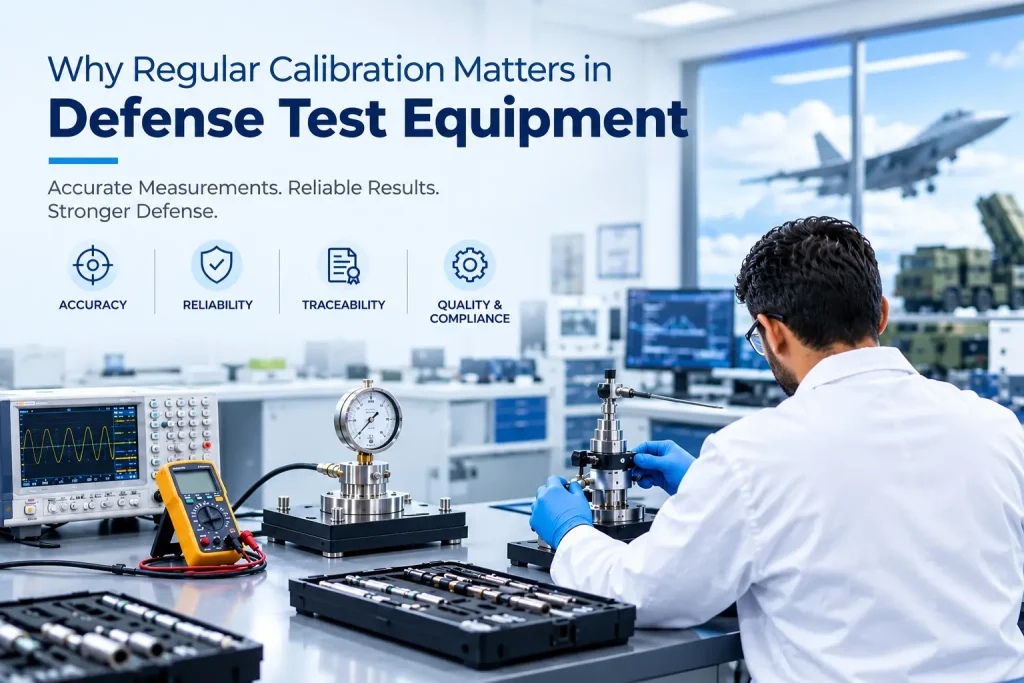
In the defense industry, accurate measurements are essential for manufacturing, inspection, testing and quality control. Defense equipment and components are often developed to demanding specifications, where even a small measurement error can affect test results, product quality or production decisions.
Regular calibration helps organisations confirm that their test and measuring instruments perform as expected and that measurement results can be relied upon.
What Is Calibration of Defense Test Equipment?
Calibration involves comparing an instrument’s measurement performance with a suitable reference under defined conditions. It helps identify measurement deviations and provides documented information about the instrument’s performance.
During regular use, instruments can be affected by ageing, handling, environmental conditions and repeated operation. In defense testing, where equipment may be used frequently or in different locations, these factors can gradually affect measurement performance.
Regular calibration helps identify such changes before they affect measurement results or testing decisions.
Why Is Regular Calibration Important?
1. Helps Maintain Measurement Accuracy
Defense manufacturing and testing involve measurements across electrical, dimensional, pressure, force, vibration, mass and flow applications.
Equipment such as digital multimeters, oscilloscopes, pressure gauges, micrometers and force measuring instruments needs dependable measurement performance. Calibration helps determine whether an instrument continues to perform within its required specifications.
2. Supports Reliable Defense Testing
The reliability of a test result depends partly on the measuring equipment used to obtain it. An instrument with measurement error can produce results that do not accurately represent the component or system being evaluated.
A planned calibration program helps organizations maintain control over their test equipment and supports more consistent defense testing.
3. Supports Measurement Traceability
For technical measurements, organizations may need to demonstrate how results relate to recognized measurement standards.
Calibration documentation can provide information about the reference standards, calibration method and measurement uncertainty. This supports confidence in measurement results and helps maintain appropriate records.
4. Supports Quality and Compliance
Calibration is an important part of controlling measuring equipment within a quality system. Proper records can demonstrate that instruments are identified, monitored and calibrated according to established requirements.
NABL accredits calibration laboratories against ISO/IEC 17025, the international standard for the competence of testing and calibration. For defence organisations, checking a calibration laboratory’s relevant accreditation scope and technical capability is important when selecting a provider.
5. Helps Reduce Unexpected Problems
Calibration should not be treated simply as a requirement for obtaining a certificate. It can help identify instruments that are no longer performing as expected.
A planned calibration schedule allows organizations to monitor due dates, manage equipment status and reduce the risk of unexpected interruptions to manufacturing and testing activities.
Which Defense Equipment Requires Calibration?
The equipment requiring calibration depends on its application and the measurements being performed. Common examples include:
- Electrical and electronic measuring instruments
- Digital multimeters and power measurement equipment
- Dimensional measuring instruments
- Pressure and vacuum instruments
- Mass and weighing equipment
- Force measuring instruments
- Vibration measurement equipment
- Air, fuel, hydraulic and gas flow meters
- Time and frequency measuring equipment
The appropriate calibration interval should consider equipment usage, operating conditions, manufacturer’s recommendations, previous calibration results and required measurement accuracy.
How Often Should Defense Test Equipment Be Calibrated?
There is no single calibration interval suitable for every instrument. The frequency should be established based on the equipment’s application, usage, operating environment, manufacturer’s recommendations and calibration history.
For critical instruments, organizations can also review previous calibration results to determine whether the existing interval continues to provide suitable control.
The goal is to maintain confidence in measurement performance while managing calibration efficiently.
What Should You Look for in a Defense Calibration Laboratory?
When selecting a calibration provider, defense manufacturers and testing laboratories should consider:
- Relevant calibration scope and technical capability
- Applicable accreditation
- Measurement traceability
- Measurement uncertainty
- Clear calibration certificates and reports
- Laboratory and onsite calibration options
- Suitable turnaround time
- Experience with the required equipment
The laboratory’s specific accreditation scope is particularly important. Accreditation alone does not necessarily mean that every type of instrument or measurement is covered.
Reliable Calibration for Defense Applications
Accurate measurement is important across defense manufacturing, inspection and testing activities. Regular calibration helps ensure that measuring and test equipment continues to deliver reliable results, while supporting measurement traceability and quality requirements.
NCQC provides laboratory and on site calibration services for defense-related equipment, covering electrical, dimensional, pressure, mass, force, vibration, time and frequency, and flow measurements. Contact us to discuss your calibration requirements and find a suitable service for your equipment.
FAQS
Why is calibration essential for defense test equipment performance?
Calibration is essential for defense test equipment because it helps verify that instruments are providing accurate and reliable measurements. Regular calibration can identify measurement deviations, support traceability and help ensure dependable results for defense testing, inspection and quality control.
How often should defense test equipment be calibrated?
Calibration intervals depend on the instrument, its usage, operating conditions, manufacturer’s recommendations, previous calibration results and required measurement accuracy. There is no single interval suitable for every instrument.
Can defense test equipment be calibrated onsite?
Yes, onsite calibration may be suitable for certain equipment and applications. The availability of onsite service depends on the instrument, measurement requirements and applicable calibration capabilities.
