


Force Calibration: Ensuring Accuracy of Load Cells, Proving Rings, and Compression Systems
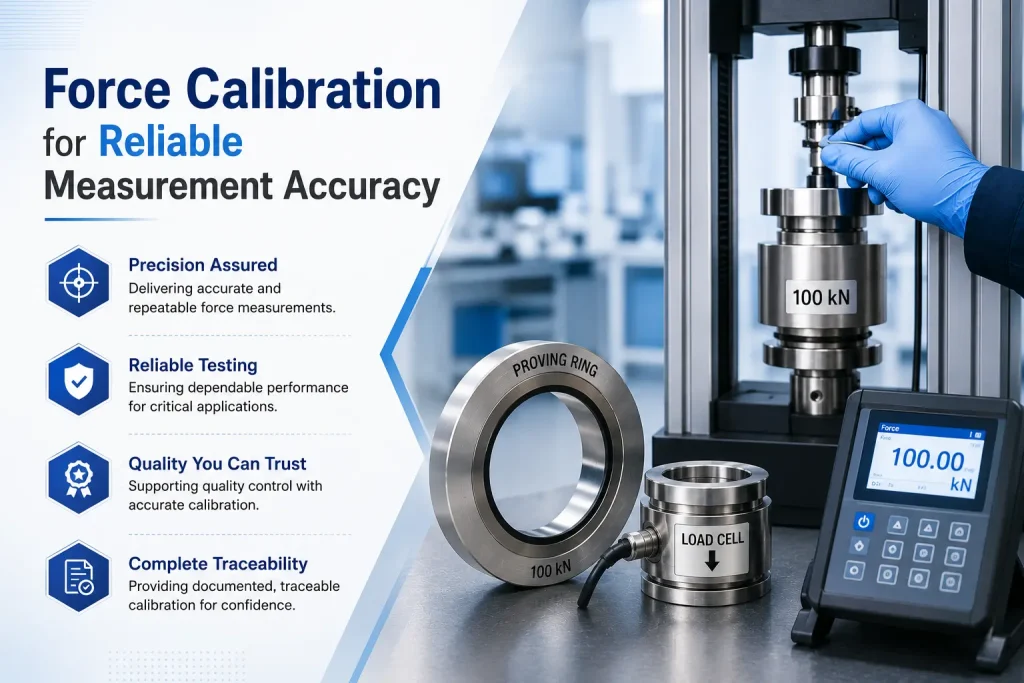
Accurate force measurement is essential for industries where testing, inspection, and quality control depend on reliable mechanical measurements. Equipment such as load cells, proving rings, and compression testing systems are used to measure applied forces in various industrial and laboratory applications. Even small measurement variations can impact test results, product quality, and overall process reliability.
Force Calibration Services help verify the accuracy and performance of force measurement instruments by comparing their readings with established reference standards. NCQC Laboratory LLP provides reliable Force Calibration solutions to help industries maintain measurement accuracy, equipment reliability, and quality compliance.
What Is Force Calibration?
Force calibration is the process of evaluating and verifying the accuracy of force measurement instruments by comparing their readings against traceable reference standards. The process identifies measurement deviations and confirms whether the equipment is operating within specified accuracy limits.
Force calibration is commonly performed for:
- Load Cells
- Proving Rings
- Compression Testing Systems
- Tensile Testing Machines
- Force Measuring Instruments
A properly calibrated force measurement system provides reliable data, improves testing confidence, and supports accurate quality control decisions.
Importance of Force Calibration
Force measurement accuracy directly affects the reliability of testing and production processes. Over time, factors such as mechanical stress, frequent usage, environmental conditions, and equipment aging can influence instrument performance.
Regular Force Calibration Services help organizations:
Maintain Measurement Accuracy
Calibration ensures that force measuring instruments provide accurate readings and operate within required specifications.
Improve Testing Reliability
Accurate measurements provide consistent test results and help organizations make decisions based on dependable data.
Support Quality Control
Calibrated equipment helps maintain product quality by ensuring testing processes meet required standards.
Reduce Measurement Errors
Regular calibration helps identify performance changes before they affect testing and inspection activities.
Improve Equipment Performance
Calibration verifies that force measurement systems continue to function effectively throughout their service life.
How Force Calibration Works
The force calibration process involves comparing instrument readings with known reference force values under controlled conditions.
- Equipment Inspection
Before calibration, the instrument is inspected to verify its physical condition and suitability for calibration. - Calibration Setup
The equipment is properly installed and calibrated using appropriate methods to ensure accurate measurement results. - Application of Reference Forces
Known force values are applied using calibrated standards, and the instrument output is recorded for evaluation. - Result Analysis
The measured values are compared with reference standards to determine accuracy and identify any deviations. - Calibration Certificate
After successful calibration, detailed results are documented, and a calibration certificate is issued containing measurement data and traceability information.
Load Cell Calibration for Accurate Force Measurement
Load cells are widely used in industrial testing and measurement applications to convert applied force into measurable signals. Due to continuous operation and mechanical stress, their performance may change over time.
Load Cell Calibration ensures that these devices continue to provide accurate and reliable force measurements.
Benefits include:
- Accurate force readings
- Improved testing consistency
- Reliable measurement results
- Better quality control
Load cell calibration is important for applications involving testing machines, production equipment, and laboratory measurement systems.
Proving Ring and Compression System Calibration
Proving rings are precision force measurement devices used to verify applied forces with high accuracy. Regular Proving Ring Calibration helps maintain measurement reliability, repeatability, and confidence in testing results.
Compression testing systems are used to evaluate the strength and performance of materials and components. Compression System Calibration ensures that applied forces and displayed values remain accurate.
Calibration helps maintain:
- Accurate force application
- Consistent testing performance
- Reliable measurement results
- Effective quality control
Applications of Force Calibration
Force calibration is required in various industries where accurate measurement is essential, including:
Manufacturing Industry
Manufacturers use calibrated force measurement equipment to maintain product quality and improve production reliability.
Automotive Industry
Force calibration supports testing of automotive components and mechanical systems.
Accurate force measurement helps maintain quality standards in aerospace testing and inspection applications.
Research and Testing Laboratories
Laboratories depend on calibrated instruments for accurate experiments and reliable testing results.
Benefits of Regular Force Calibration
A proper calibration program provides several advantages:
- Improved measurement accuracy
- Reliable test results
- Reduced measurement uncertainty
- Better equipment performance
- Increased confidence in test data
- Complete calibration documentation
Regular calibration scheduling helps organizations maintain reliable force measurement systems.
Conclusion
Force Calibration is essential for maintaining the accuracy and reliability of load cells, proving rings, compression systems, and other force measurement instruments. Regular calibration improves measurement confidence, supports quality control, and ensures reliable testing results.
NCQC Laboratory LLP provides professional Force Calibration Services, Load Cell Calibration, and Traceable Calibration solutions to help industries maintain accurate measurement systems and dependable equipment performance. Contact NCQC Laboratory LLP today to discuss your calibration requirements and request a quotation.
FAQS
What is force calibration and why is it important?
Force calibration verifies the accuracy of force measurement instruments by comparing readings with traceable reference standards. It helps maintain measurement accuracy, reliable test results, and proper quality control.
Which instruments require force calibration in industrial settings?
Force Calibration is commonly performed for instruments such as load cells, proving rings, compression testing systems, tensile testing machines, and other force measuring devices used in industrial and laboratory applications.
What are the key differences between load cell calibration and compression system calibration?
Load Cell Calibration focuses on verifying the accuracy of individual load cells, while Compression System Calibration ensures that complete compression testing systems apply and measure force accurately during testing procedures.
Why choose NCQC Laboratory LLP for Force Calibration Services?
NCQC Laboratory LLP provides professional Force Calibration Services, Load Cell Calibration, and Traceable Calibration solutions with proper documentation and reliable measurement practices. The laboratory helps industries maintain accurate equipment performance and support quality control requirements.
